
How Coffee Shops Make Cold Brew
There’s nothing quite like the relief of a freezing cold, perfectly smooth cold brew when the summer heat is practically melting the pavement. We all gladly hand over our money for that rich, mellow kick from our local café, but it’s funny how few of us actually know what goes on behind the counter to make it. It’s not just regular iced coffee, and it’s definitely not just yesterday’s hot drip poured over a cup of ice. So, what exactly is the secret? Let’s dive into the surprisingly simple yet incredibly patient process baristas use to brew that perfect batch, and why the cold extraction method completely changes the flavor game.
The Cold Brew Process Explained
Cold brew coffee is made by steeping coarsely ground coffee beans in cold water for an extended period, typically 12 to 24 hours. This longer brewing time allows for the extraction of flavors without the bitterness that comes from heat extraction, which is common in traditional brewing methods. The result? A smoother, less acidic cup of coffee that many coffee lovers prefer.
Why Cold Brew Matters
The choice of brewing method directly impacts flavor and texture. Cold brew is often praised for its natural sweetness and reduced acidity, making it approachable for those new to coffee or sensitive to acidity. In contrast, hot coffee can have a harsher taste and may be off-putting for some. This benefits coffee shops, as they can attract a wider range of customers by offering a cold brew option.
Typical Ratios and Timing
For most cold brew coffee, a common ratio is 1:4 or 1:5 coffee to water. This translates to 1 cup of coffee grounds for every 4-5 cups of cold water used. The steeping time is crucial; anywhere from 12 to 24 hours is ideal, depending on how strong you want the flavor. A shorter steep time results in a lighter brew, whereas a longer steep yields a bolder taste.
Common Mistakes in Cold Brew Preparation
One frequent mistake people make when attempting cold brew at home is using hot water or steeping for too short a duration. These missteps can lead to an unattractive bitter flavor profile that misses the mark of cold brew’s smoothness. It’s essential to adhere to the cold steeping method at the intended temperatures for the desired flavor.
Advanced Cold Brew Techniques
While the basic method of cold brewing is straightforward, coffee shops often employ a few advanced techniques to enhance the quality of their cold brew. Here are two methods worth noting:
1. Coffee Bags
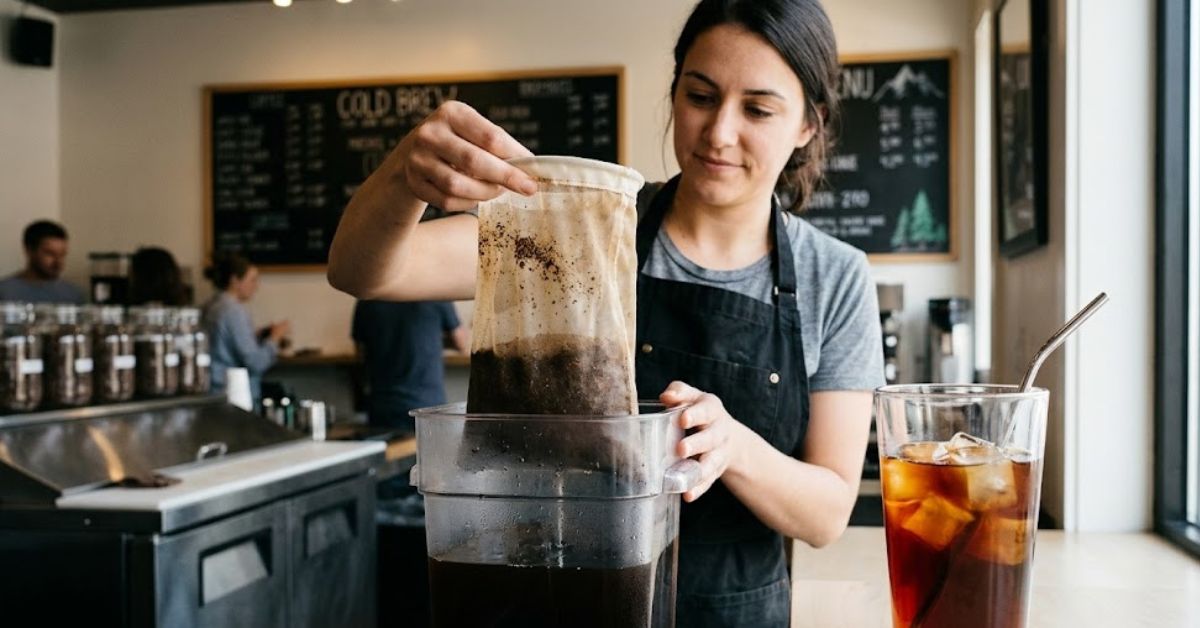
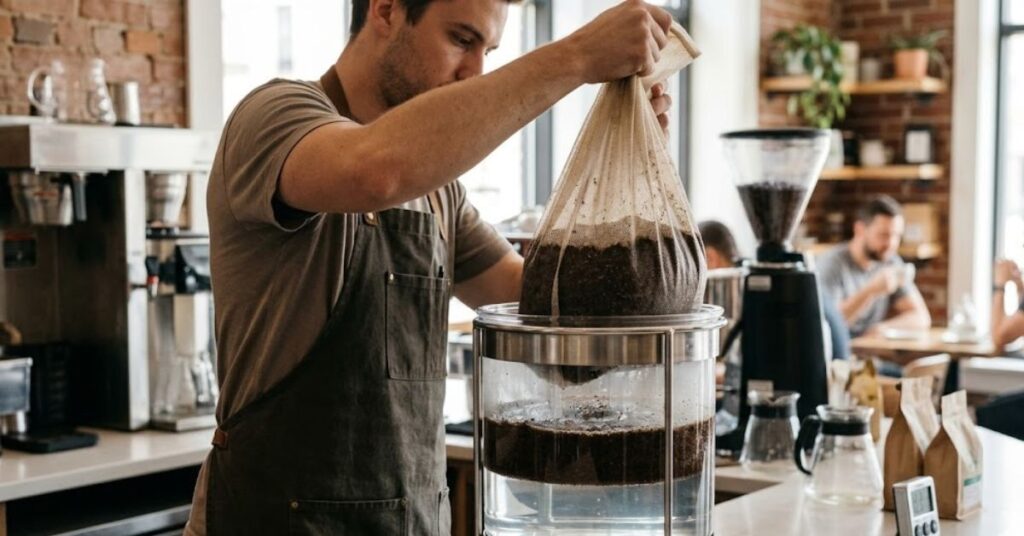
Some coffee shops use tea-like bags filled with coffee grounds, allowing for easy removal after steeping. This ensures a consistent extraction and simplifies the process, especially when scaling up for larger volumes.
2. Nitro Cold Brew
Nitro cold brew takes things a step further. By infusing cold brew with nitrogen gas, coffee shops create a creamy texture and a frothy head similar to draft beer. Although it requires special equipment, the end product offers a unique mouthfeel and appearance, giving coffee shops an edge in presentation.
Which Option is Best for You?
If you’re considering making cold brew at home, weighing your priorities is key. If you’re after consistency and ease, the coffee bag method is user-friendly and effective. For those looking to impress and innovate, the nitro cold brew system is worth the investment, but it requires more time and equipment.
For beginners, starting with conventional cold brewing (coarse grounds and a steep of 12 to 24 hours) will provide a solid foundation. Once confident, exploring the advanced techniques can elevate your coffee game further.
Choosing the Right Beans
The choice of coffee beans plays a significant role in cold brew flavor. Many coffee shops favor darker roasts like Colombian or Sumatra, which tend to yield bolder flavors when cold brewed. If brewing at home, opting for a medium or dark roast enhances the natural sweetness while balancing acidity.
Grinding Your Coffee
Grinding coffee beans to a coarse texture is essential. A finer grind can lead to over-extraction, resulting in a bitter brew. Think of it this way: coarser grounds allow for a gentle extraction over an extended period, while fine grounds don’t provide the same smoothness and can muddy the flavor.
Storage and Serving Cold Brew
Once brewed, cold brew can be stored in the refrigerator for up to two weeks, making it an excellent option for meal prep or quick grab-and-go drinks. However, it’s crucial to dilute the concentrate with water or milk before serving. Undiluted cold brew is often too strong for most palates, so a 1:1 dilution ratio of cold brew to water or milk is commonly recommended.
Serving Temperature
While cold brew is served cold, some coffee shops offer it over ice. This not only cools the drink but also provides the option for a chilled refreshing beverage that still maintains its flavor integrity, rather than watering it down, as would happen with hot coffee poured over ice.
Final Thoughts
Understanding how coffee shops make cold brew can elevate your coffee experience, whether at home or in a café. Prioritize the right beans, maintain proper ratios, and embrace the steeping time for maximum flavor. If you’re new to cold brew, start simple with the basic method and gradually explore advanced techniques like nitro cold brew once you feel comfortable. Ultimately, the smooth, balanced taste of well-made cold brew coffee makes the endeavor worthwhile.