How Are Baristas Trained in Coffee Shops?
We’ve all had that moment, you step into a gorgeous cafe, order your usual morning latte, and take a sip only to find it tastes like mildly coffee-flavored milk. It’s a pretty quick reminder that all the fancy, top-of-the-line espresso machines and beautifully roasted beans in the world don’t mean a thing if the person behind the counter doesn’t know how to dial them in. Watching a skilled barista pull the perfect shot and steam milk to that exact, glossy micro-foam texture looks effortless, but that kind of precision certainly doesn’t happen by accident. It really made me wonder about the behind-the-scenes process. How exactly do coffee shops take someone who might just be a casual coffee drinker and turn them into the expert we blindly trust to save our mornings?
The Basics of Barista Training
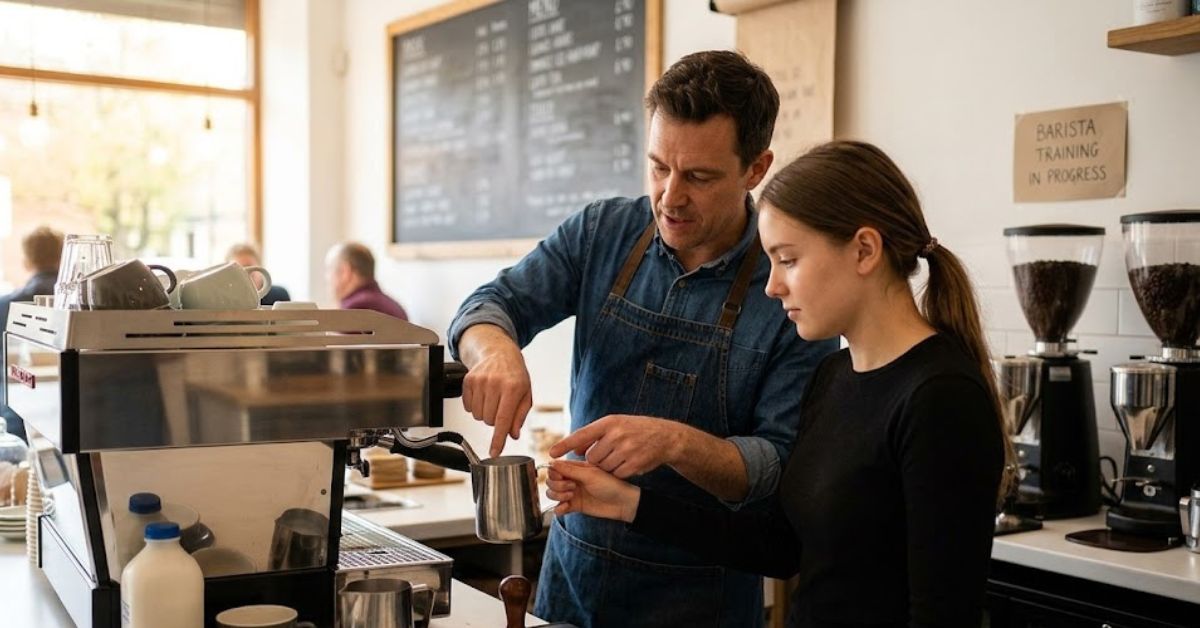
Training for a barista typically begins with an introduction to the fundamentals of coffee-making. This includes understanding coffee beans, their origins, and the different brewing methods. This information is foundational because it helps baristas appreciate the product they work with and makes a difference in the final brew.
New baristas usually start with a general overview of the coffee options available, including espresso, drip coffee, and French press. Learning the specific brewing ratios is crucial; for example, a standard espresso shot uses about 18-20 grams of coffee to yield 36-40 grams of brewed espresso. This ratio directly impacts the richness and flavor of the drink.
Why Understanding Coffee Matters
Knowing about coffee beans isn’t just trivia; it affects taste and quality. For instance, lighter roasts typically have more acidity, while darker roasts can taste bitter. Misunderstanding these nuances might lead to poor drink preparation, creating customer dissatisfaction. A common mistake among beginners is neglecting to weigh the coffee or the water, which leads to imbalanced flavors.
Technical Skills Development
Once the basics are understood, baristas dive into technical skills. This involves mastering the espresso machine, grinders, and various brewing techniques. The espresso machine, for instance, requires deft handling; baristas must learn to properly tamp the coffee for an even extraction. A common misconception is that tamping just involves pressing down on the coffee. In reality, the pressure applied and the consistency of the grind are critical. A consistent grind allows for uniform extraction, which affects the taste.
Tools of the Trade
Baristas are trained on various equipment, including grinders and steam wands. Understanding each tool’s role is vital. For example, if the grind size is too coarse, the coffee will be under-extracted, resulting in a weak drink. On the other hand, if it’s too fine, over-extraction may occur, leading to bitterness. Balancing these factors is not just about having the right tools but knowing how to use them under different conditions. Speed can come at the cost of quality, making it imperative for new baristas to understand when to prioritize one over the other.
Customer Service and Efficiency
Another critical area of training is customer service. A great coffee shop experience goes beyond just good coffee; it’s about how customers are treated. Baristas need to learn how to engage with customers, take orders accurately, and handle complaints professionally. Training in this area often includes role-play scenarios that simulate common customer interactions.
Timing is essential in a busy coffee shop. Training programs stress the importance of multitasking. Baristas must learn to prepare drinks while also greeting customers and managing the register. A frequent error is becoming too focused on one task, which can lead to longer wait times and unhappy customers. Mastering the balance between speed and quality is key to creating a positive customer experience.

Specialty Drinks and Creativity
Training also includes crafting specialty drinks, such as flavored lattes or seasonal offerings. Baristas must learn to balance flavors, maintain consistency, and present drinks attractively. For example, the classic caramel macchiato requires not only the right amount of espresso but also an understanding of how the caramel layers blend with the milk. A misstep in layering can lead to a drink that’s visually unappealing as well as less flavorful.
Common Mistakes in Specialty Drink Preparation
A common mistake among beginner baristas is not tasting their creations. Not sampling drinks can mean missing out on adjusting flavors to meet customer preferences. To perfect a specialty drink, baristas should prepare one, taste it, and adjust the components, such as syrup or milk textures, to ensure quality. This practice teaches baristas to refine their skills over time.
Continuous Learning and Feedback
Training shouldn’t stop after the initial onboarding; continuous improvement is vital. Many coffee shops encourage ongoing training workshops and tastings, where baristas can learn about new coffee trends and refine their techniques. Furthermore, peer reviews and customer feedback play essential roles in performance improvement. The process of critiquing drinks and techniques helps baristas understand areas needing work.
Benefits of Ongoing Training
Continuous education not only enhances individual skills but also contributes to a stronger team dynamic. When baristas share their insights and experiences, the entire shop benefits. A significant misconception is that once training is complete, no further learning is necessary; however, the coffee industry is always evolving, and staying updated is vital for maintaining quality and customer satisfaction.
Conclusion
Barista training involves a comprehensive approach that combines technical skills, customer service, and ongoing education. Understanding coffee and mastering the equipment is crucial for making high-quality drinks that meet customer expectations. New baristas should initially focus on grasping the basics and perfecting their techniques before advancing to specialty drinks.
A practical next step for aspiring baristas is to seek out opportunities for hands-on practice in a coffee shop environment. This real-world experience, paired with continual education, will ensure they are well-equipped to create exceptional coffee experiences. Start with the fundamentals and progressively build on those skills for success in the coffee-making world.

Author: Kei Em Cee
I’m Kei Em Cee, and honestly? I’m just a coffee enthusiast exploring the world one cup at a time. I am not a world-class barista or a coffee scientist! I’m just someone who loves a great brew and wants to see how much better a daily ritual can get. From testing out new beans to figuring out why my French Press tastes better on some days than others, I’m learning as I go. Whether you're a lifelong black coffee drinker or someone who loves a splash of vanilla, I’m just here to share what I find along the way. Let’s see where the next bag of beans takes us.