
How Much Caffeine Is in a Coffee Bean?
Coffee lovers, this one is for you. We all know that coffee gives us that magical morning boost, but have you ever wondered how much caffeine is actually in a single coffee bean? Understanding the caffeine content in coffee beans can help you choose beans, brewing methods, and portion sizes that match your energy needs.
What Determines Caffeine in a Coffee Bean
Not all coffee beans are created equal. The caffeine content depends on several factors, including species, size, roast level, processing, and growing conditions.
- Coffee Species – The two most common coffee species are Arabica and Robusta.
- Arabica beans contain about 1.2% caffeine by weight, have a smoother, milder flavor, and are widely used in specialty coffee.
- Robusta beans contain roughly 2.2% caffeine by weight, are stronger, more bitter, and often used in instant coffee or espresso blends.
- Bean Size and Weight – Bigger beans do not necessarily mean more caffeine. The actual caffeine is measured by weight, so a tiny Robusta bean can pack more punch than a large Arabica.
- Roast Level – Many people assume dark roast has more caffeine, but light roast beans actually retain slightly more caffeine by volume. Roasting decreases water content, so darker beans are slightly lighter but taste stronger.
- Processing Method – Beans that are naturally dried may retain slightly more caffeine than wet-processed beans, although the difference is minor.
- Origin and Growing Conditions – Altitude, climate, and soil type can all subtly influence caffeine levels. Beans grown at higher altitudes often develop a more complex flavor but similar caffeine content, while beans grown in warmer regions may have slightly higher caffeine concentrations.
How Much Caffeine Is in a Single Coffee Bean
Here is a practical breakdown:
- Arabica bean: ~6–12 mg of caffeine per bean
- Robusta bean: ~12–20 mg of caffeine per bean
These numbers are approximate because the size of the bean, roast level, and even the origin can affect caffeine content. For perspective, an 8-ounce cup of brewed coffee contains roughly 80–100 mg of caffeine. That means it takes about 8–15 Arabica beans or 4–8 Robusta beans to equal a standard cup of coffee.
Espresso Beans Versus Brewed Coffee
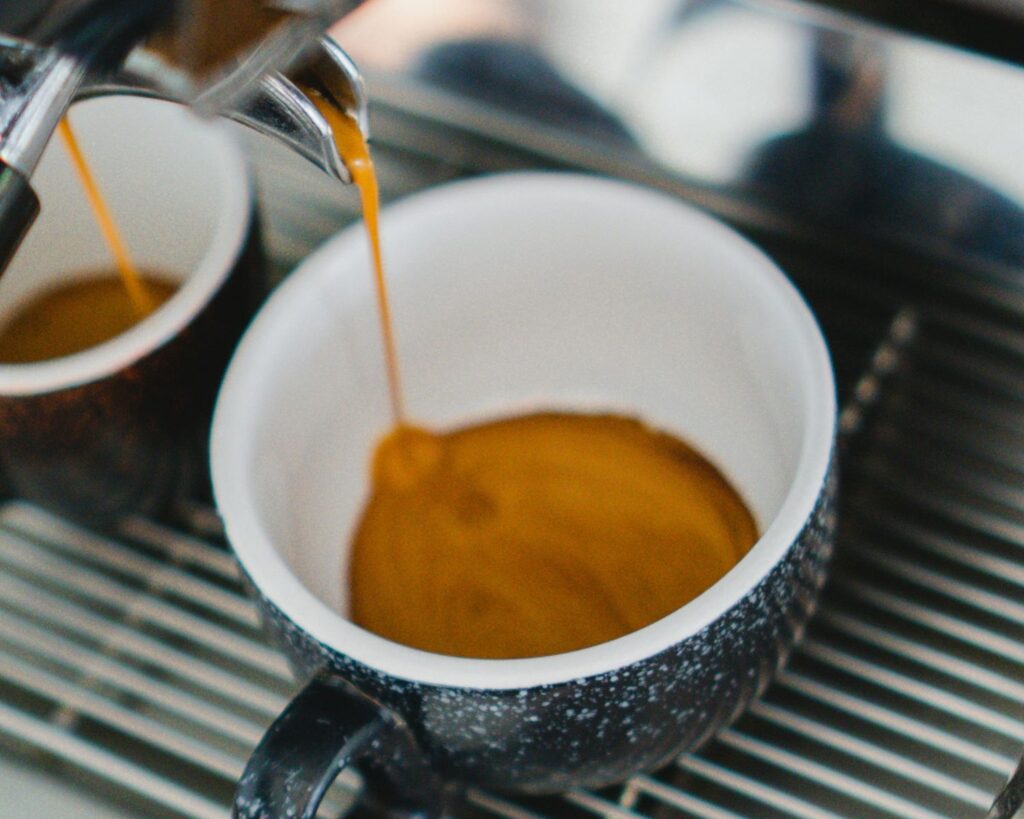
Espresso beans are often blends of Arabica and Robusta. A single espresso shot uses about 7–9 grams of ground coffee, which is roughly 50–60 Arabica beans or 30–40 Robusta beans. Despite the small serving, espresso has a concentrated caffeine content, so a tiny cup can give the same caffeine boost as a full brewed coffee.
Many people do not realize that while espresso tastes stronger, its total caffeine is similar to a standard brewed cup if measured per ounce. The small volume is what makes it feel more intense.
How Roasting Affects Caffeine
Roast level does not drastically change caffeine content by weight, but it can slightly impact the caffeine per bean.
- Light roast: Beans retain slightly more caffeine per bean because they are denser and have not lost as much mass during roasting, and they have a brighter, more acidic flavor.
- Medium roast: Offers a balance of flavor and caffeine, which makes it popular for drip coffee.
- Dark roast: Slightly lower caffeine by weight but tastes stronger due to the bold roasted flavors.
If you prefer dark roast for flavor, know that the caffeine difference is minor. Light roasts provide slightly more kick per bean, while dark roasts satisfy the taste buds.
Caffeine in Different Coffee Bean Forms
Caffeine content also varies depending on how you consume coffee beans:
- Whole Beans – The caffeine per bean is as measured above. Whole beans maintain freshness and flavor longer, but caffeine remains stable.
- Ground Coffee – Grinding does not change caffeine, but it affects extraction. Finer grinds release caffeine faster during brewing.
- Instant Coffee – Made from brewed and dehydrated coffee, instant coffee usually contains 30–90 mg per 8-ounce cup, depending on the brand and type of beans used.
- Espresso Pods – Single-serve pods use 5–7 grams of ground coffee, giving about 60–80 mg of caffeine per shot.
How Many Coffee Beans Equals a Cup of Coffee
If you are curious how the beans translate to your daily cup:
- Brewed Coffee (8 oz): 80–100 mg caffeine, about 8–15 Arabica beans or 4–8 Robusta beans
- Espresso (1 oz shot): 60–75 mg caffeine, about 50 Arabica beans or 30 Robusta beans (ground)
- Cold Brew (12 oz): 150–200 mg caffeine, roughly double the number of beans depending on strength
This is a fun way to visualize just how concentrated caffeine is in each bean compared to the beverage we drink.
Tips for Managing Caffeine from Coffee Beans
- Know Your Bean: Arabica for milder caffeine, Robusta for a stronger punch
- Mind the Roast: Light roast packs slightly more caffeine per bean, dark roast packs flavor
- Adjust Your Brew: Grind size and brewing time affect extraction and caffeine release
- Experiment with Portion Size: More beans per cup equals more caffeine, fewer beans equals less
- Track Your Daily Intake: Knowing how many beans go into your cup helps prevent unwanted jitters or sleepless nights
Fun Facts About Coffee Beans and Caffeine
- The caffeine content in a single coffee bean is enough to boost alertness if eaten straight, but it is extremely bitter, so most people prefer brewing.
- Robusta beans are roughly twice as caffeinated as Arabica beans, which is why instant coffee often uses Robusta.
- Coffee beans were first discovered in Ethiopia and quickly spread worldwide for their energizing effects.
- Specialty coffee shops often label blends by origin, roast, and even caffeine content per shot, so you can make informed choices.
The Takeaway
Coffee beans are tiny powerhouses of caffeine. A single Arabica bean has roughly 6–12 mg, while a Robusta bean has 12–20 mg. How many beans you use in a brew determines your caffeine intake, and roasting, bean type, and brewing method all play a role.
By understanding how much caffeine is in a coffee bean, you can choose beans, roasts, and brewing methods that give you the perfect level of energy, flavor, and enjoyment. Coffee is more than a morning ritual, it is an experience, and now you know exactly what makes each sip energizing.