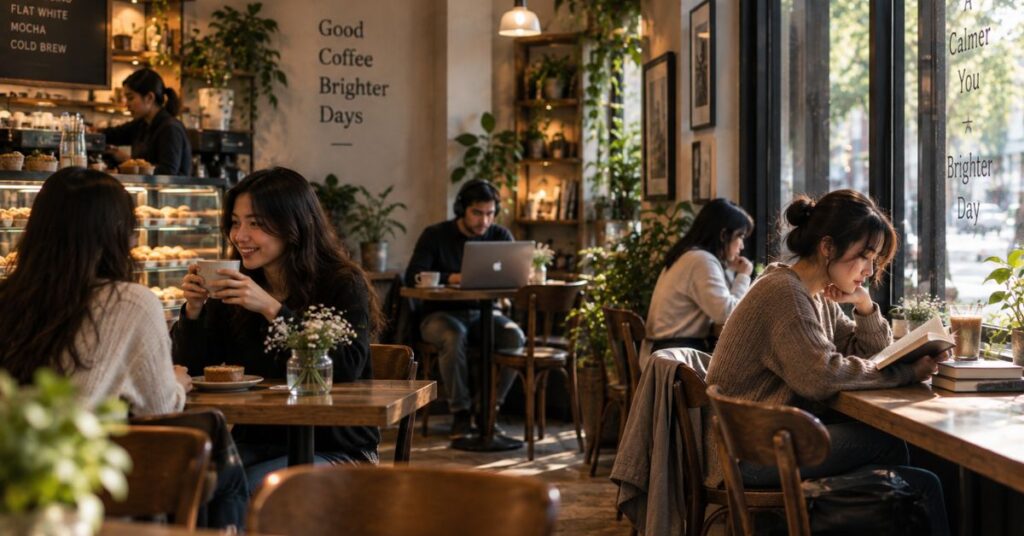
Pampanga’s coffee scene is becoming an interesting part of everyday life. From casual coffee runs and work sessions to meeting friends and exploring different areas, cafés have become more than places to grab a drink.
When people talk about Pampanga, coffee isn’t always the first thing that comes to mind.
Food probably gets that honor.
And for good reason. Pampanga has a strong food culture, and people come from different places to experience it.
But I’ve noticed that coffee has slowly become part of the everyday conversation too.
There are more reasons to go out for coffee now than simply needing caffeine.
You can meet a friend, work for a few hours, catch up with someone, study, go on a date, or just look for somewhere comfortable to spend the afternoon.
And I think that’s what makes Pampanga’s coffee culture interesting.
Coffee Has Become Part of Everyday Life
Coffee isn’t exactly new to Filipino households.
A lot of people grew up seeing coffee as part of the morning routine. It might have been instant coffee before school or work, coffee after breakfast, or a cup shared with family members during the day.
What’s changing is the experience around it.
Going out for coffee has become its own activity.
Instead of simply asking, “Do you want coffee?” people might ask which café they want to try, where they should meet, or which area they want to visit.
The coffee is still important, but the place has become part of the experience too.
Cafés Give People a Reason to Go Out
I think this is especially noticeable when you’re trying to make plans with friends.
Sometimes nobody really knows what they want to do.
You don’t necessarily want a full meal. You don’t want to plan an entire day. You just want to see someone and talk.
Coffee is an easy answer.
Find a café, order something, sit down, and catch up.
It’s simple enough that you don’t have to plan much around it.
And because there are cafés in different parts of Pampanga, you can choose somewhere based on where everyone is coming from.
Pampanga Is More Than One Coffee Scene
One thing that’s important when talking about coffee in Pampanga is remembering that the province is not one single area.
Angeles City is different from San Fernando. Mabalacat is different from Guagua. Smaller municipalities have their own communities, routines, and local businesses.
So when we talk about the “Pampanga coffee scene,” we’re really talking about many smaller local scenes.
Some people may spend most of their time around Angeles or Clark. Others may rarely go there and have their own favorite places closer to home.
That’s one reason I like looking at coffee by location.
You don’t always need to travel across the province to find somewhere worth visiting.
Cafés Are Becoming Social Spaces
A café can be a surprisingly flexible place.
It’s a place where two friends can sit and talk for an hour.
It’s also a place where someone can sit alone with a laptop and work.
A student can study there. A couple can have a date. Someone can meet a client. A family can stop for a drink.
The same space can serve completely different purposes depending on who’s using it.
That’s a big part of modern café culture.
It’s not just about the coffee.
It’s about what people do while they’re drinking it.
Coffee and Work Have Started to Overlap
Remote work and flexible schedules have also changed how people use cafés.
For some people, working from a café provides a break from working at home. A different environment can make an ordinary workday feel less repetitive.
But this doesn’t mean every café is automatically a workspace.
Things like seating, Wi-Fi, outlets, noise, and how busy the café gets all matter.
That’s why I think it’s useful to look at cafés as different types of spaces rather than assuming every café is suitable for every activity.
Some are great for a quick coffee.
Some feel comfortable for a longer visit.
Some are better for conversations.
Others might be more comfortable for quiet work or study.
Students Have Become Part of Café Culture Too
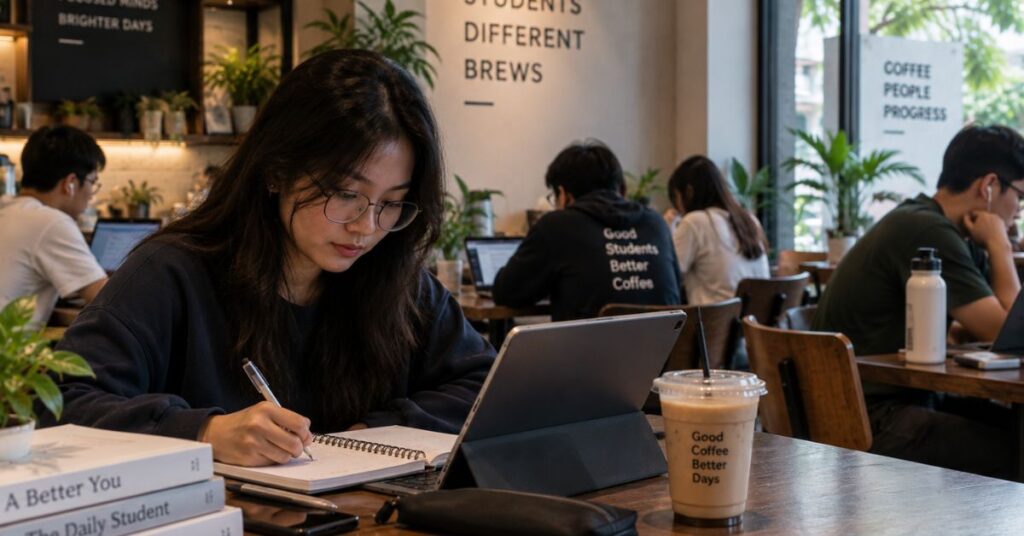
Walk into a café at the right time and you might see students studying with notebooks, tablets, or laptops.
For some students, getting out of the house can make studying feel easier.
There’s also something about being surrounded by other people who are doing something that can help create a sense of focus.
Of course, not every café is suitable for a long study session, especially during busy hours.
But the fact that people use cafés this way says something about how these spaces have changed.
A café can be more than a place you visit for ten minutes.
Coffee Can Also Be a Way to Explore Pampanga
This is probably one of the things I like most about having a growing café scene.
You can use coffee as a reason to explore.
Maybe you’ve never spent much time in a particular municipality. You look for a café there, make a small trip out of it, and end up discovering other places along the way.
It doesn’t have to be a major tourist itinerary.
You could simply choose a town, find somewhere for coffee, have lunch, and see what else catches your attention.
That’s a pretty easy way to make an ordinary weekend feel a little different.
Local Coffee Doesn’t Have to Mean Complicated Coffee
When people hear “coffee culture,” they sometimes imagine specialty coffee, expensive equipment, complicated brewing methods, and people talking about tasting notes.
That is one part of coffee culture.
It isn’t all of it.
Someone enjoying a simple cup of coffee with friends is part of coffee culture too.
So is someone making coffee at home before work.
So is a student grabbing an iced coffee after class.
So is a family stopping at a café while running errands.
Coffee culture becomes interesting because different people experience it in different ways.
Philippine Coffee Has Its Own Story
Pampanga is also part of a much bigger Philippine coffee story.
The Philippines grows coffee in different parts of the country, with regions producing different varieties and styles of coffee.
For people who are used to imported beans, exploring Philippine-grown coffee can be a fun way to learn more about what’s being produced locally.
And you don’t need to become a coffee expert to enjoy it.
You can start by trying a Philippine coffee and simply asking yourself whether you like it.
That’s how most of us discover what we enjoy anyway.
Cafés Reflect the Communities Around Them
One of the reasons local cafés can be interesting is that they aren’t completely separate from the communities around them.
The customers, the conversations, the routines, and the reasons people visit all become part of the atmosphere.
A café near an office area might have a different rhythm from one near schools.
A café in a busy commercial area might feel different from one in a quieter neighborhood.
And that’s why I don’t think there is one definition of what a “Pampanga café” should look like.
The local community helps shape it.
There’s Still Room for the Scene to Grow
I don’t think Pampanga’s coffee culture needs to become exactly like Manila or any other major city.
In fact, I think it would be more interesting if it developed in its own way.
Pampanga already has its own food culture, communities, traditions, and way of life.
Coffee can become another part of that identity without replacing what already exists.
There is room for specialty coffee, casual cafés, neighborhood coffee shops, work-friendly spaces, and places that simply make a good cup of coffee.
They can all exist together.
That’s What Makes It Interesting to Me
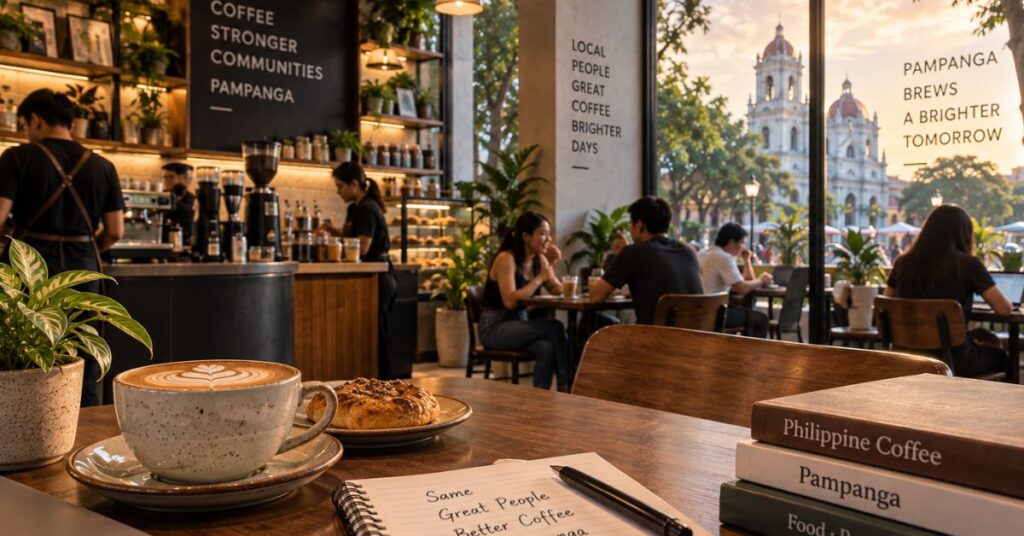
I’m interested in the Pampanga coffee scene because it doesn’t feel like coffee is only about following a trend.
For a lot of people, it’s simply becoming part of their routine.
It’s the coffee before work.
The afternoon drink with a friend.
The study session before an exam.
The quick stop while running errands.
The weekend café visit.
The quiet hour alone.
Those ordinary moments are what eventually create a coffee culture.
Final Thoughts
Pampanga’s coffee scene is interesting because it is connected to everyday life.
People aren’t only visiting cafés because they want a particular drink. They’re using these spaces to meet people, work, study, relax, explore different parts of the province, and spend time outside the house.
And I think that’s where the story gets more interesting.
Coffee doesn’t have to become the biggest thing Pampanga is known for.
It just has to become part of the place.
If you’re curious about what the local coffee scene looks like in different parts of the province, you can start exploring through the Coffee Shops in Pampanga Directory and see what’s available in your area.
Maybe your next favorite café is closer than you think.